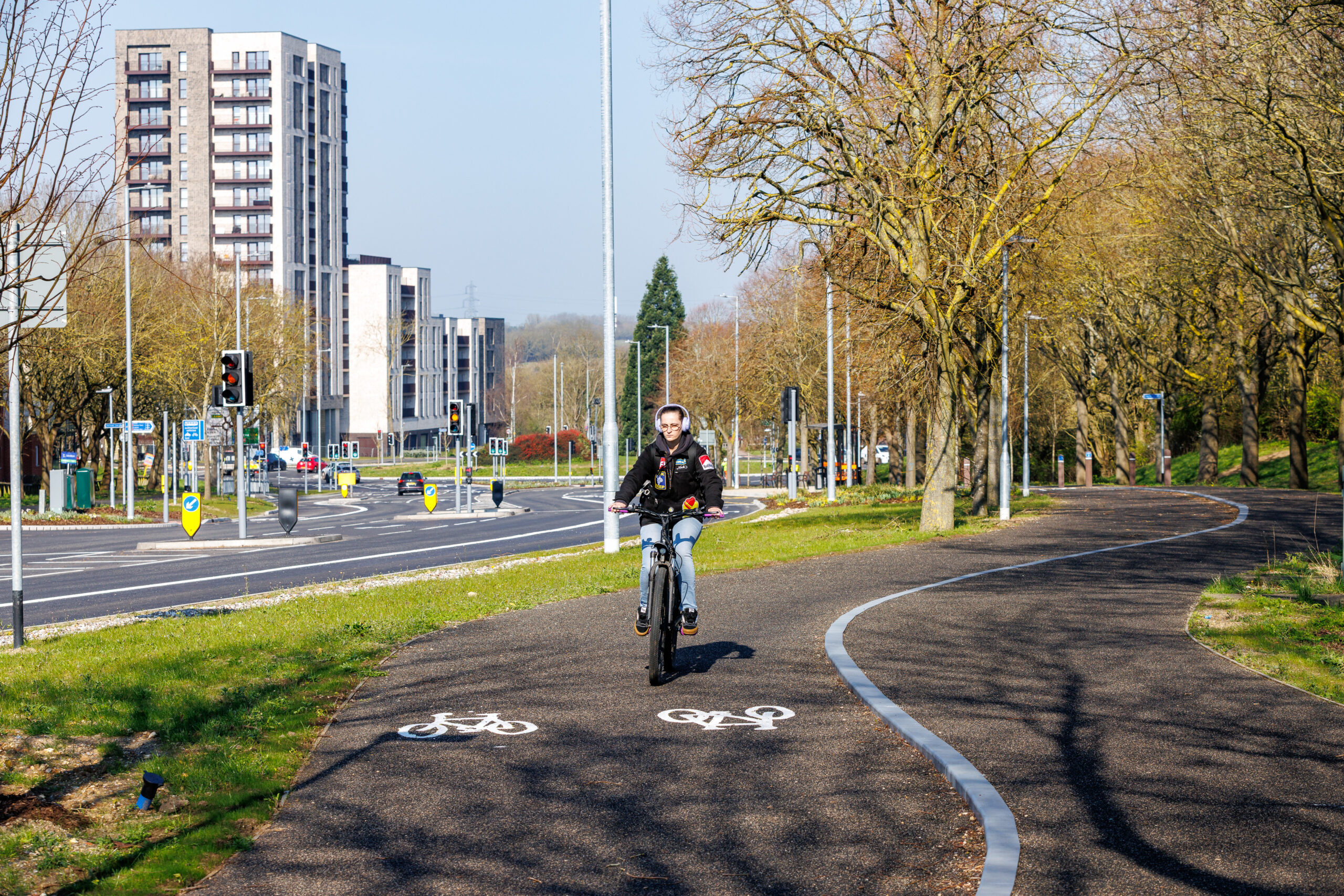
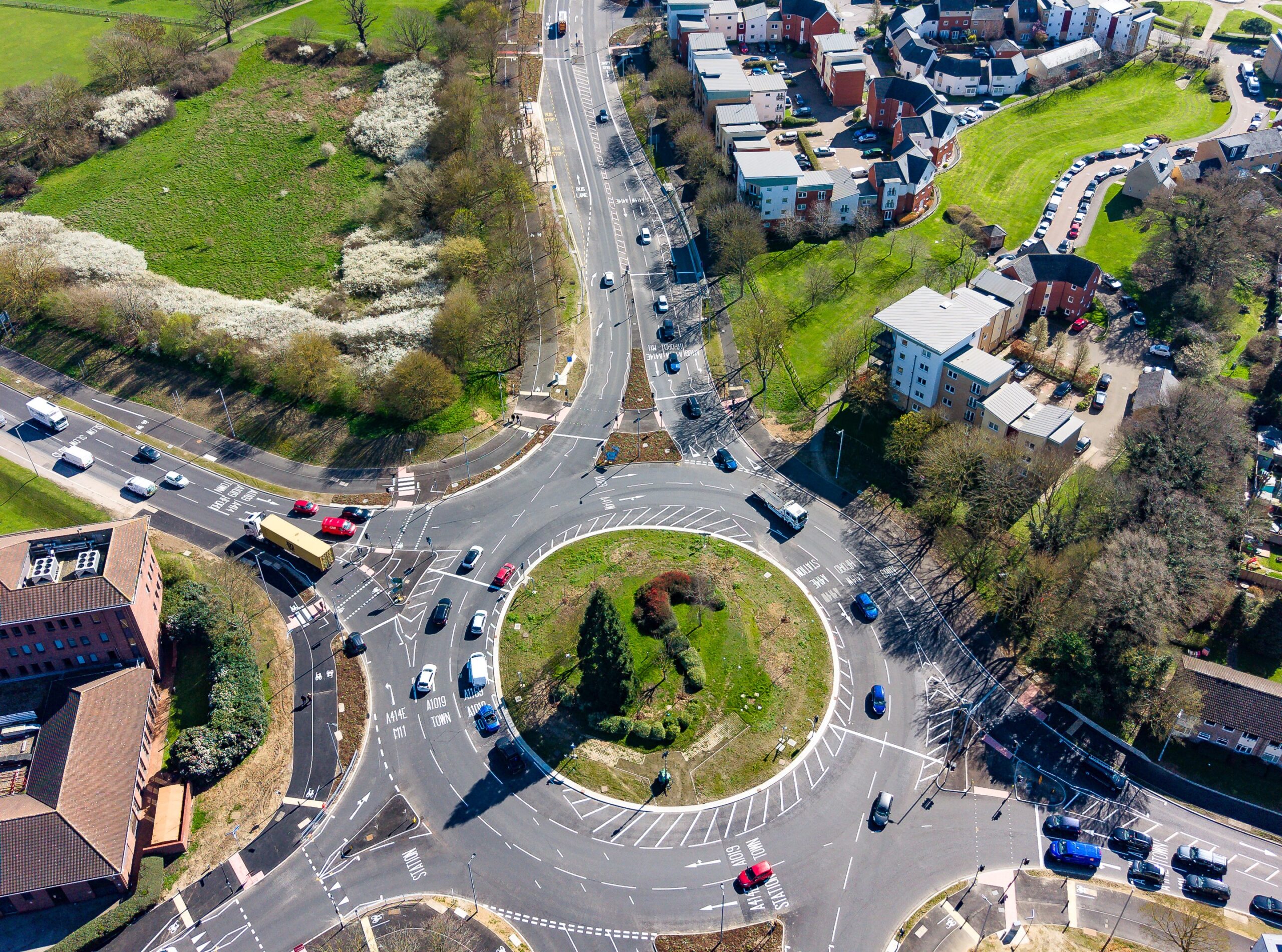
October 2024 saw Harlow & Gilston Garden Town unveil the Reimagining How We Can Travel Differently framework which sets out the five-council partnership’s commitment to active and sustainable travel locally.
Work has already begun on delivering this vision with last year seeing the first spades in the ground on a new public travel route between Harlow Town Centre and Burnt Mill roundabout.
It will prioritise future walking, cycling and bus services with long-term plans connecting the new route to the seven Garden Town villages coming forward in Gilston.
Rob Goodall from built environment experts Arup worked on the framework with the HGGT Team and, in this blog post, he discusses how small changes in our travel habits will make a big difference in the future.
Reimagining How We Can Travel Differently gives people an understanding of what the future is going to look like in Harlow and the role that movement and transport will play locally over the next 20 years.
This isn’t about banning cars or people driving from A to B but creating a plethora of choice for everyone – be it walking, cycling, public transport or driving.
Active travel infrastructure can complement positively to the existing urban environment and also delivers wider benefits to communities.
It brings forward a whole range of alternative ways that people can travel as part of their everyday lives.
Research tells us that the vast majority of journeys in Harlow are under two kilometres and undertaken by car.
For those that are able to, this distance is likely one which could be walked or cycled comfortably.
So why are people driving such short distances?
Why do people prefer travelling by car rather than walking or cycling if they can?
Adapting existing neighbourhoods and districts to accommodate a more complex mix of pedestrians and bikes requires thoughtful planning and the Garden Town is continuously looking at these factors as part of its Local Cycling and Walking Infrastructure Plan.
What we have currently is people using a road network for short journeys which wasn’t really designed for that.
Our streets, dating back decades, were not originally designed to accommodate modern life such as daily school run, peak hour traffic and that’s where challenges occur.
With that also comes issues such as congestion and more people sat in traffic jams.
Car journeys being the default quickest option is a common yet often incorrect perception.
We must deliver alternative travel options that are quick and reliable if we want towns to offer healthy active travel networks.
Our culture in the UK has also changed hugely over time. One such example is that research shows parents are either not letting their children out on their own or 400m from home is the absolute limit.
That’s drastically different to 30 years ago when children would go miles from their doorstep with friends, take themselves to school and back.
So how can we tackle access to schools and make everyone feel it is safe enough to walk, cycle or let the children travel there independently?
It is a tough nut to crack but would certainly open up the roads and ease congestion.
Consumer trends such as the increase in home deliveries have also created issues – around 30% of traffic in central London is dedicated to freight and couriers and, like school trips, the streets can’t accommodate this extra volume.
While online shopping is convenient for the consumer, it’s inefficient when it comes to road space.
Could through the night deliveries be a possible solution, leaving bigger parcels in secure lockers outside your house? Or a central collection point at some kind of delivery hub?
Dealing with the freight and logistics is a key part of reducing traffic volumes.
The new public travel route coming forward in Harlow currently will prioritise bus services, which remain the nation’s favourite mode of public transport.
I see buses as an important part of society as they’re a lifeline for people that can’t travel in other ways.
To build user trust, you have to ensure that buses are going exactly where people need them to go and they must be frequent and reliable.
A review of the bus services in and around Harlow, to make sure they are fully addressing the needs of residents and visitors, is one of the recommendations that Arup has made in the Reimagining How We Can Travel Differently framework.
The HGGT Team has already acted upon this by hosting a Bus Summit last year with key operators locally.
It would be great if Harlow became a place where those who can do without don’t feel the need to use their cars every day.
Underlying the success of the active travel plans is behavioural change with walking/cycling friendly streets in the Garden Town.
Residents should feel comfortable going somewhere on foot or jumping on a bike because key facilities like shops and schools are easily reachable.
And for those who prefer, there’s a reliable bus service to access. It’s the job of the Garden Town’s five council partners to give residents an opportunity to make that change and that’s starting to happen through the enhanced infrastructure being built in Harlow currently.
Ultimately, active travel produces more resilient and enjoyable places to live and work and Harlow could be on its way to becoming an exemplar one of those.